
In brief
A carrier's liability insurance does not mean your vehicle has cargo insurance. Before dispatch, check the type of cover, insured journey stages, value, deductible, exclusions and claims procedure.
1. Clarify the type of protection
You decide whether to arrange cargo insurance and approve its terms and cost. Agree with your freight forwarder who will arrange the policy.
- Check whether the offer is for cargo insurance or carrier liability insurance. Cargo cover follows the risks and conditions in the policy. Liability insurance concerns losses for which the carrier is responsible; liability limits may be below the vehicle's value.
- Request the insurer's name, policy or certificate, full wording and endorsements. Confirm who is entitled to claim and receive payment.
2. Match cover to the whole journey
- Compare the planned route with the policy: collection, loading, sea or road transport, transfers, terminal storage and final unloading. Identify any stages that are not covered.
- Confirm where and when cover starts and ends, storage time limits and what to do if the route changes.
3. Agree the value and deductible
- Confirm the insured value, currency, valuation basis and cover limits. Ask for a deductible calculation to understand what may remain payable by you.
- For a vehicle batch, check whether the deductible applies per vehicle or per incident, and confirm the total cover limit.
4. Check exclusions for your vehicle
- Disclose existing defects and the vehicle's condition to the party arranging insurance. Ask specifically about paint scratches, wheels, tyres, handling and movement under the vehicle's own power.
- Check the policy's special conditions. An 'all risks' label does not remove exclusions, and cover for one vehicle does not confirm cover for another.
5. Agree the claims procedure
- Keep the notification contact, deadlines, policy, transport documents and condition photographs together.
- Agree with your forwarder and receiver who records the vehicle's condition, sends notices and coordinates any inspection required by the policy. Share the claim instructions with them before dispatch.
Checklist
Five insurance checks before dispatch
Completed: 0 / 5
Use this to prepare with your forwarder and receiver. It does not confirm cover. Resolve unclear terms with the insurer or insurance adviser before dispatch.
Updated: October 27, 2026
Source: West Matterhorn
https://wm-shipping.com/guides/cargo-insurance-and-carrier-liability#checklist
Deductible or franchise: what is the difference?
These mechanisms work differently. Ask for a calculation under your policy; other limits and exclusions still apply.
- A deductible or excess is subtracted from the calculated compensation.
- A threshold franchise leaves losses at or below the threshold unpaid. If the loss exceeds it, the threshold itself is not deducted.
Which costs may remain payable by you?
Check the deductible, expert inspection, recovery and storage costs separately. Payment for physical damage does not by itself confirm cover for delay or lost sales.
The bumper and paint-scratch examples each had a USD 500 deductible. That amount does not establish the deductible for the Sprinter repairs or any other shipment.
Does a paid claim confirm cover for my shipment?
No. Another claim does not establish cover for your vehicle, route or period. Obtain confirmation before dispatch and ask the insurer or an insurance adviser to explain any unclear terms.
From our own work
A real example
Mercedes bumper damage: insurer compensation
- Cases from
- 2025
- Route
- Route not disclosed
- Damage noticed
- Damage found at delivery
- Compensation paid by
- Insurance company
What happened
The Mercedes had been insured at the client's request. Damage to the rear bumper was discovered at delivery.
How the claim was assessed
The insurer requested post-incident photographs, the handover report and transport documents, including the bill of lading. Its appointed expert inspected the vehicle where it was located, issued a report and assessed the damage.
Outcome
The insurer paid compensation subject to a USD 500 deductible. The full amount and financial breakdown are not published.
Photos: 2
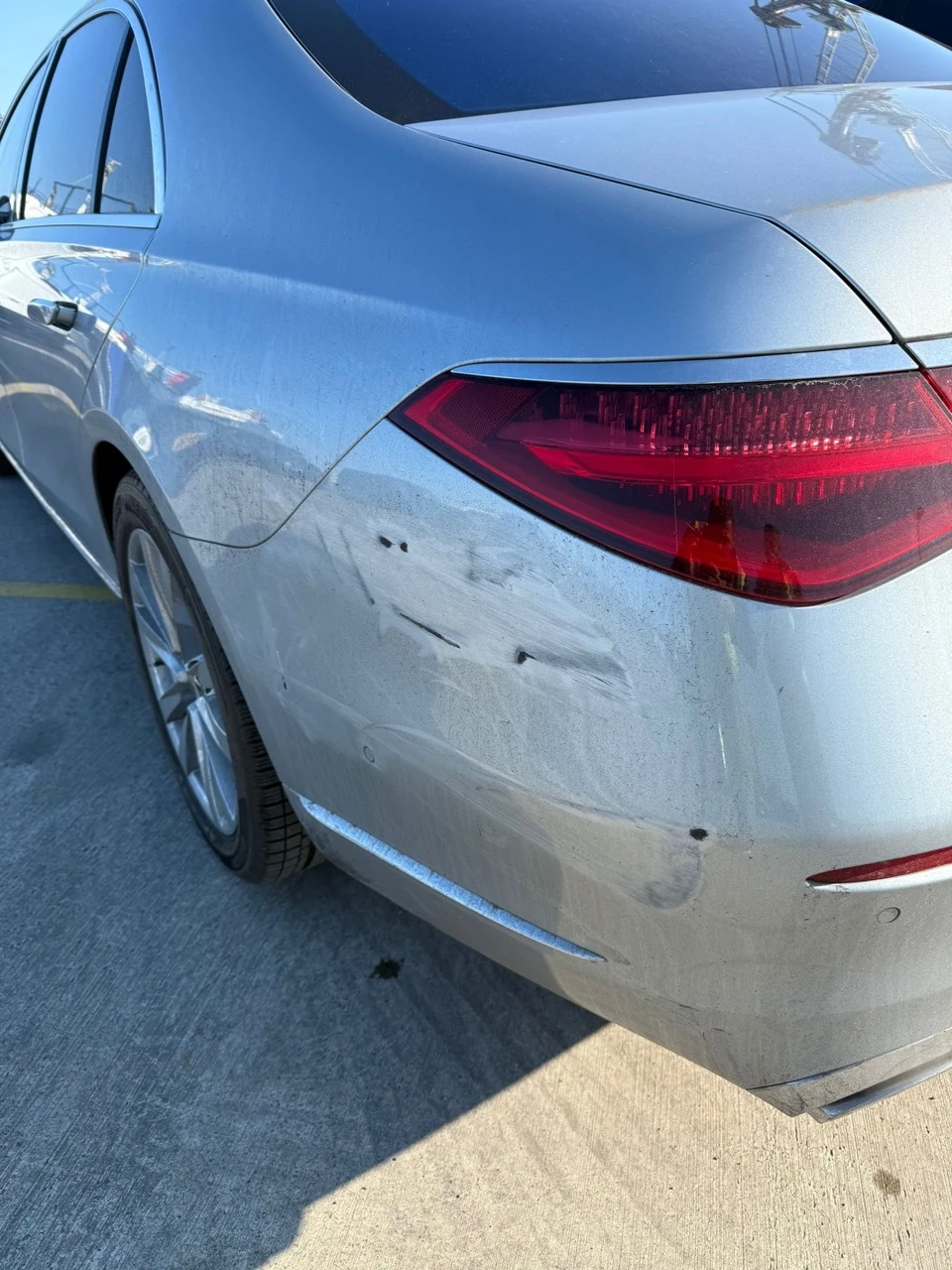
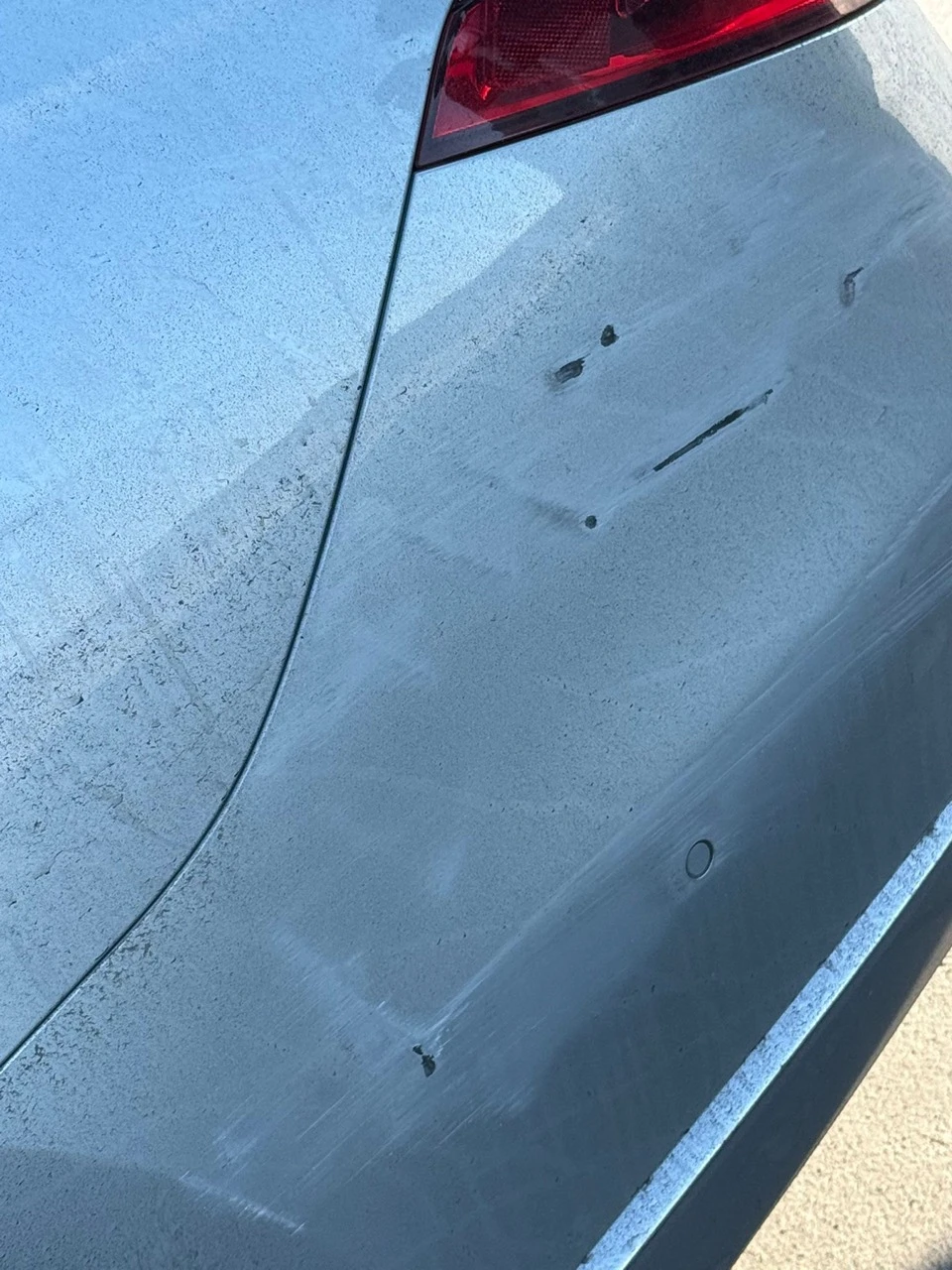
What this means for you
Ask the forwarder to collect the handover and transport documents, and agree who arranges access for the insurer's expert. Photographs alone may not be enough to assess the claim.
This claim does not establish cover or a USD 500 deductible for another shipment. The settlement time and policy wording are not provided.
About this example
Source: the owner's account and authorized photographs. The owner confirmed on 25 October 2026 that this incident took place in 2025. The route is not disclosed.
A real example
Paint scratch: damage recorded at the incident
- Cases from
- 2026
- Route
- Route not disclosed
- Damage noticed
- Damage noticed when it occurred
- Compensation paid by
- Insurance company
What happened
The vehicle was insured at the client's request. The scratch was noticed when the incident occurred and photographed with a ruler.
How the claim was assessed
The insurer requested post-incident photographs, the handover report and transport documents, including the bill of lading. Its appointed expert inspected the vehicle at its location, issued a report and assessed the damage.
Outcome
The insurer paid compensation subject to a USD 500 deductible. The full amount and financial breakdown are not published.
Photos: 1
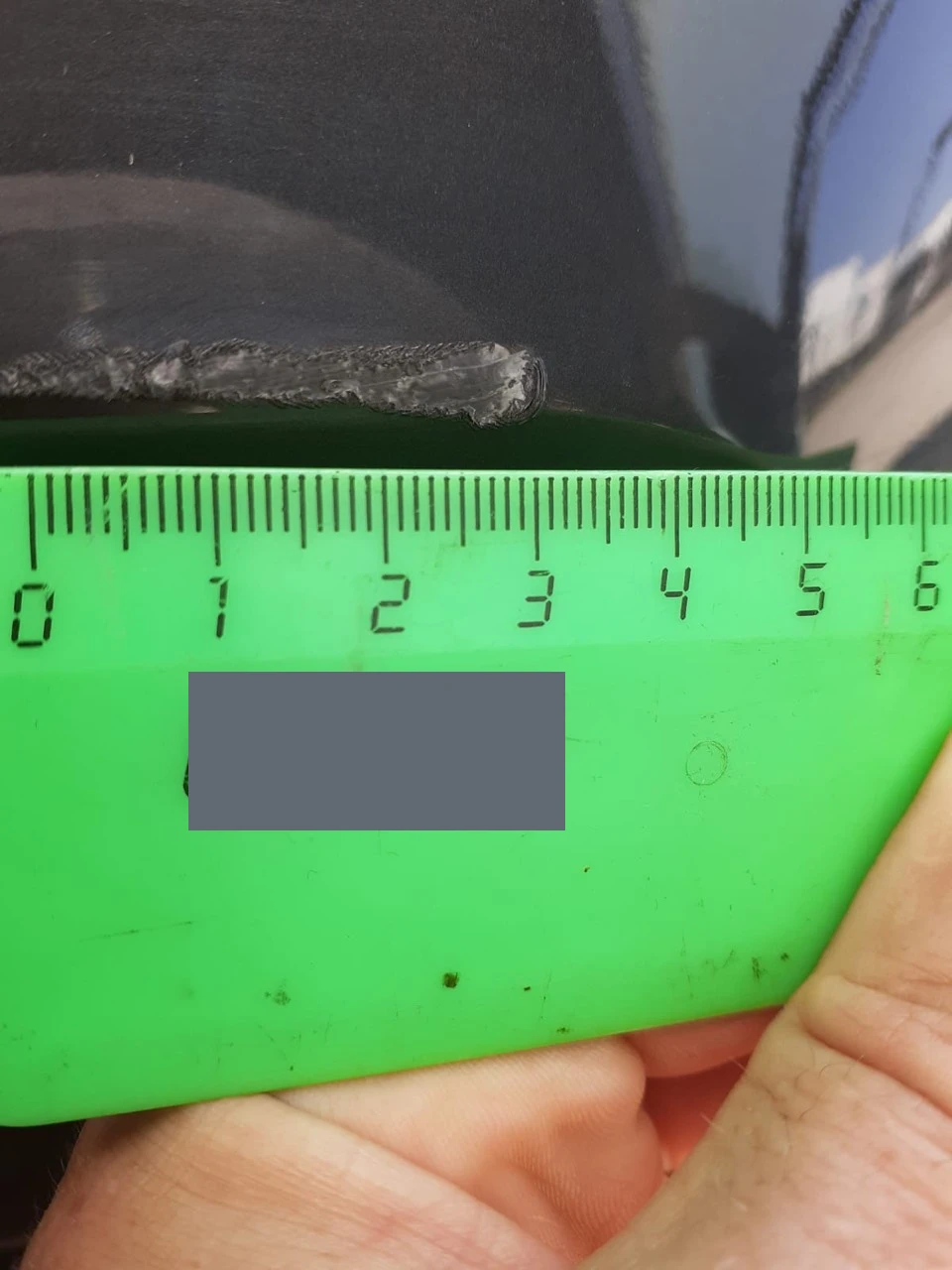
What this means for you
Ask the coordinator to obtain a damage record from the party that discovered it. A photograph with a ruler helps show the size, but the claim also needs the documents required by the insurer.
This is a separate claim, not proof that every scratch is insured. The settlement time and policy wording are not provided.
About this example
Source: the owner's account and authorized photographs. The owner confirmed on 25 October 2026 that this incident took place in 2026. The route is not disclosed.
A real example
Sprinter repairs under carrier liability insurance
- Route
- Transport within Europe
- Stage
- Vehicles on a car transporter
- Basis of compensation
- CMR carrier liability insurance
What happened
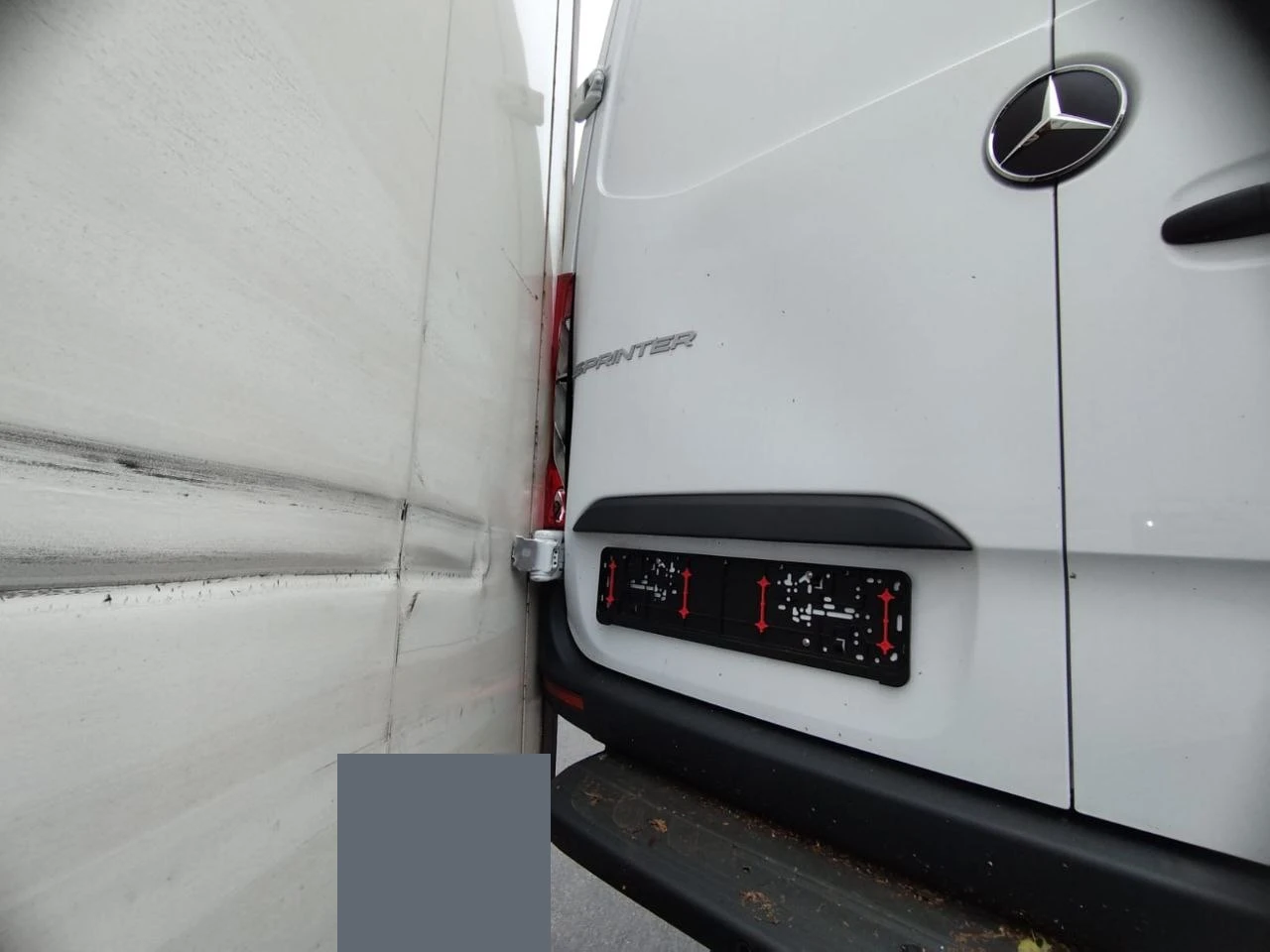
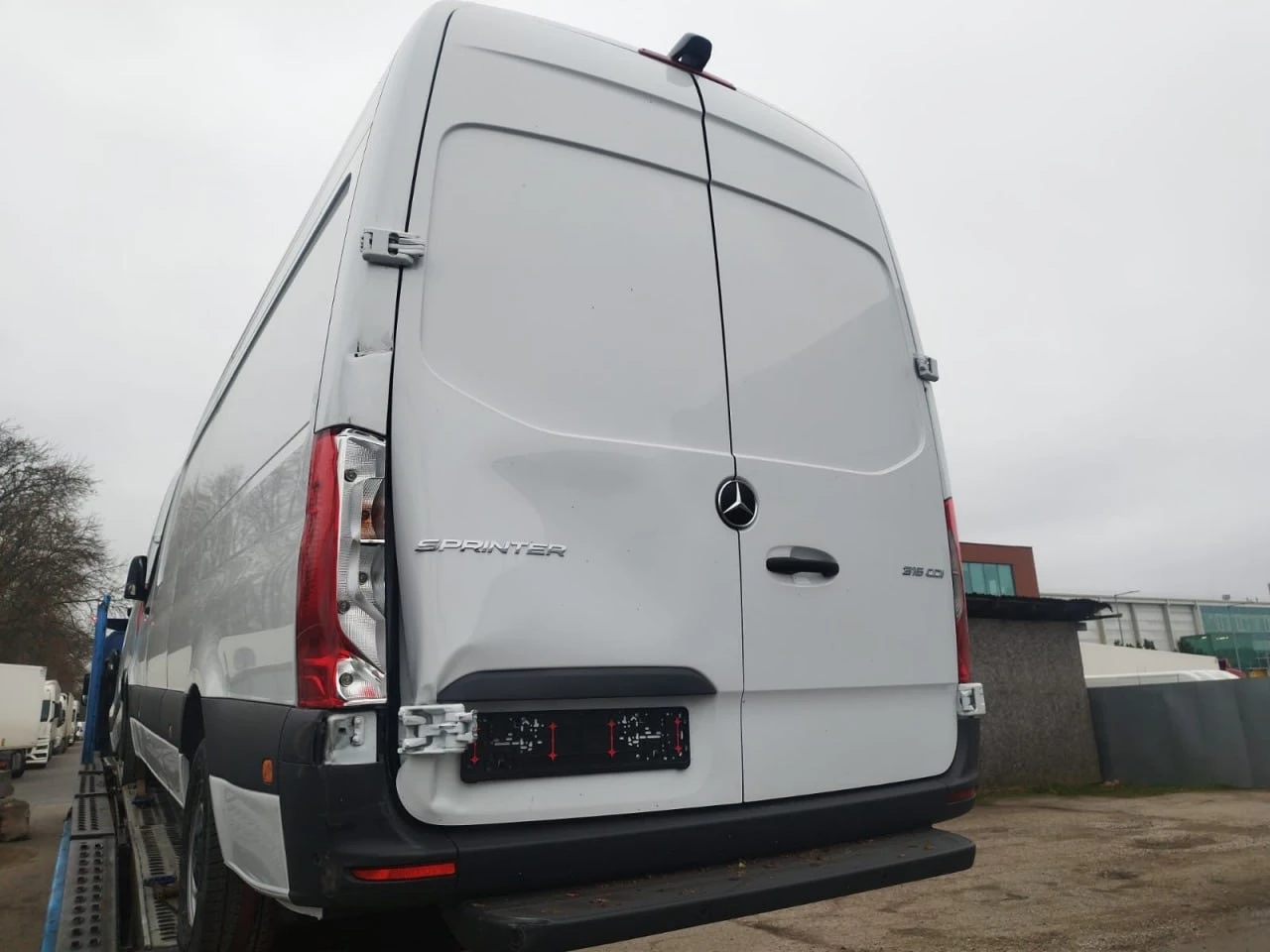
During transport within Europe, a truck driver reversing a semitrailer struck the Sprinters on the car transporter.
How the claim progressed
Police were called to record the incident. Photographs and documents were collected and submitted to the insurance agent. After the insurer approved the repairs, the vehicles went to an authorized Mercedes-Benz service centre.
Outcome
The vehicles were repaired and the client's costs were fully compensated under the carrier's CMR liability insurance, according to West Matterhorn's account.
Photos: 3
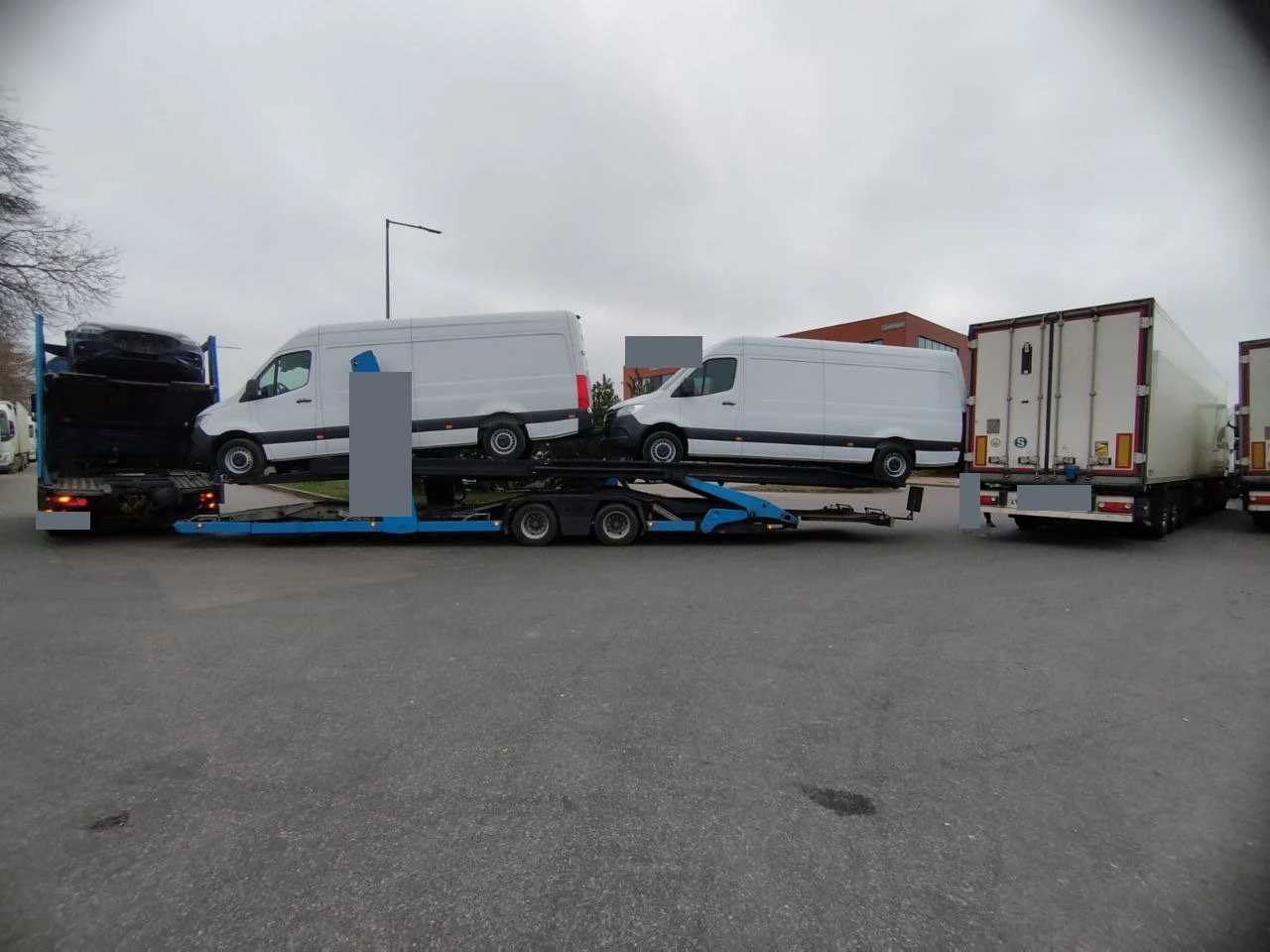
What this means for you
Agree with the forwarder who handles the insurance claim and obtain repair approval before non-urgent work starts. Here the client's costs were covered under carrier liability insurance, not a separate cargo policy.
The result applies to this incident. The policy wording, settlement time and amount are not published; they should not be inferred for another shipment.
About this example
Source: West Matterhorn's account and photographs supplied on 22 October 2026. The original police and settlement documents are not published.
Cases on this topic
What to keep in mind
We arrange cargo insurance on request, subject to the shipment and contract. It is not automatically included. This guide does not confirm cover or compensation: the policy, transport agreement and applicable rules determine what can be paid.
Documents and sources
- Policy or certificate, full policy wording and endorsements for your shipment.
- Transport agreement, transport documents and claim instructions. The CMR reference concerns international road-carrier liability, not cargo insurance or universal rules for every route.
- The glossary explains deductible and franchise terminology. Your policy determines how they apply to your shipment.